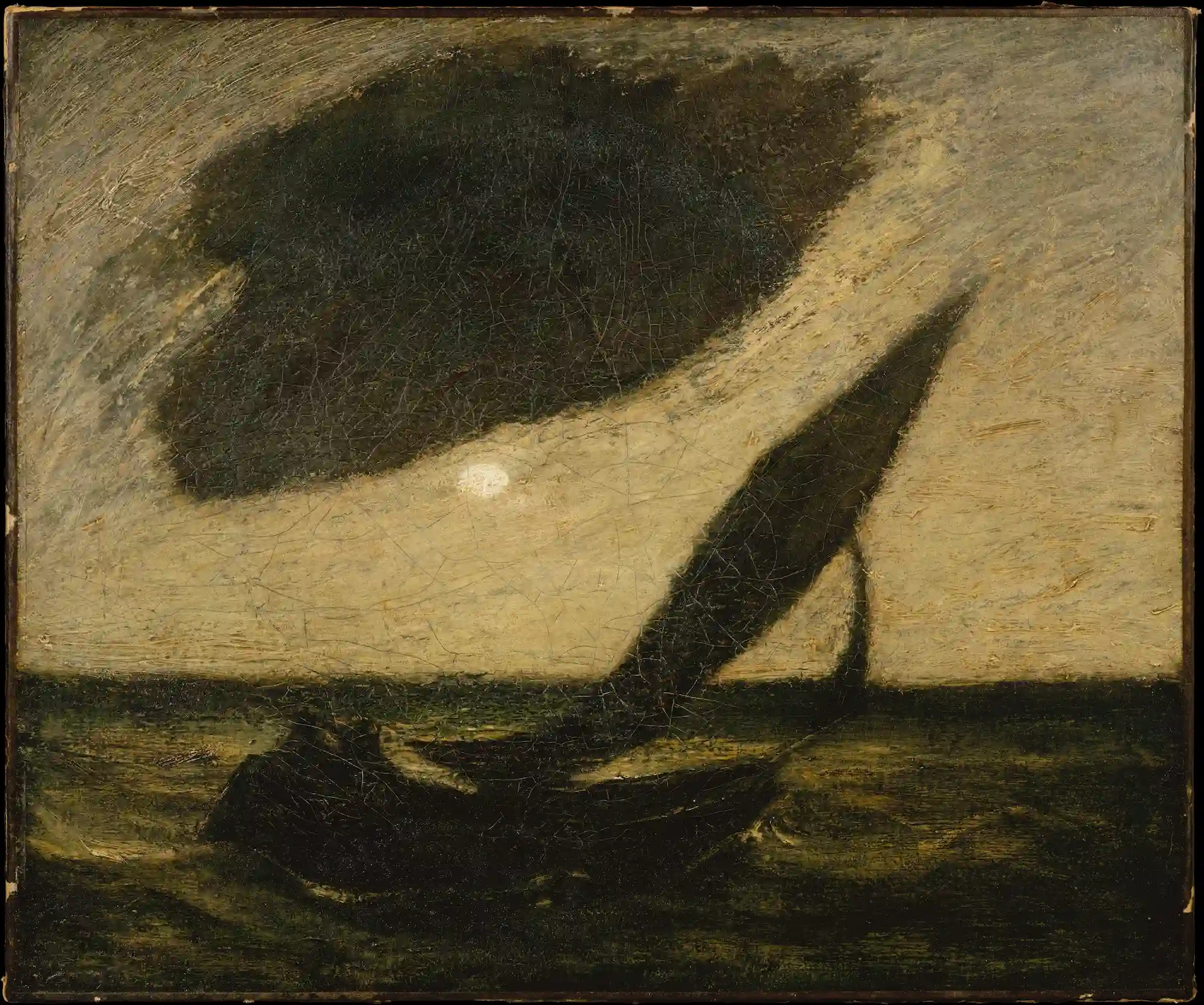
Under a Cloud, by Albert Pinkham Ryder
It was there all along:
a knot beneath the skin,
a stranger's tongue in darkness,
coiled, waiting mouth-to-vessel
while I walked and ate and slept
and never knew, never felt it stirring,
just that deep gnaw, that hollowing ache,
that darkness thickening in the tissue.
No cry, no warning, just
bones housing something gnarled,
matchhead ready to strike.
They found it there, blooming dark
on the screen where blood should sing,
should flow, should be clean,
and they pulled, pulled, pulled it out—
thread by living thread—this thief,
this almost-killer caught in the act
of waiting.
The doctor traced the boundaries
like a cartographer mapping
unexplored territories.
“Here is where it lived,” he said,
“here is where we won,” and marked
the margins of invasion
on pages I couldn't read.
But nights now, nights it comes back—
how close it nested. How patient.
How it waited.
Because the terror isn’t in the blast;
it’s in the stillness, in the could-have-been,
in that second before the click,
before the spark, before the knowing.
It’s in the clock’s steady hand moving, moving,
and sometimes when the house goes dark,
when breath slows, when minutes pool,
I feel it there again: ghost-fuse,
phantom-threat, something coiled and fraying,
waiting, ready to flare, ready to bare
its teeth when no one’s watching,
when everyone’s watching,
when the scans come back,
when the phone rings,
when closing your eyes feels
like sleight of hand.
February 20, 2025

‘Howdy hoody! Lemme guess: you was just passing through the middle of middle England, and you recognized the flame-decorated Ferrari outside my Hobbit Hole, and you buzzed ‘cos you fancied a parley?'
I once told a therapist my father was molesting me. It wasn’t true. I was twenty-five and exhausted, lying awake most nights trying to understand why I felt so sad when nothing in my life was obviously wrong.

Here I am, looking at this copy of a // two hundred-dollar book.

duty pulled a mountain along lesser used roads. // time was ill-spent preparing workers for the crossing.